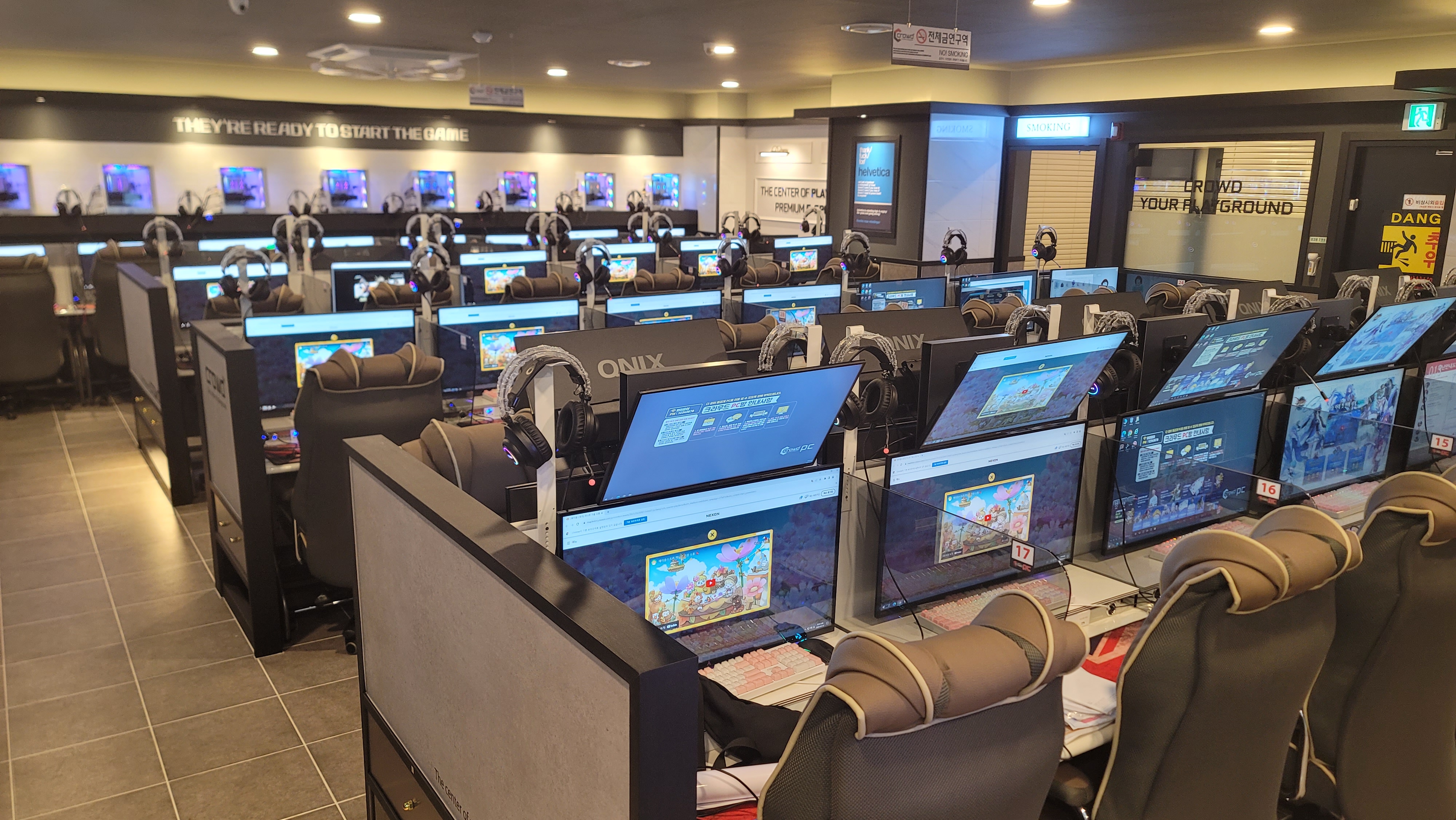

A PC Bang (literally, “PC Room” or PC Café) is a specialized gaming café in South Korea, where patrons rent high-performance computers on an hourly basis. Equipped with cutting-edge hardware and ultra-fast internet connectivity, these cafes provide an immersive gaming environment. Beyond gaming, PC Bangs have evolved into social hubs, offering a variety of snacks and meals like instant ramen, fried chicken, and beverages enjoyed right at the gaming stations.
Origin and Rise of PC Bangs
PC Bangs first emerged in South Korea in the late 1990s, driven primarily by two pivotal developments: the explosive popularity of Blizzard Entertainment’s “StarCraft,” released in 1998, and the rapid expansion of broadband internet infrastructure. Unlike Western gaming cultures, primarily focused around home gaming consoles, Korea’s densely populated urban landscape and distinct social dynamics fostered a unique public gaming culture that rapidly took root.
Factors Behind the Popularity
The widespread success of PC Bangs in Korea can be attributed to several key factors:
- Social Gaming Dynamics: Korean culture highly values communal experiences and social interactions. PC Bangs became ideal venues for friends to gather and play games together at an affordable rate.
- Economic Accessibility: Initially, owning a high-performance gaming computer was prohibitively expensive. PC Bangs democratized gaming by providing access to powerful computers for as little as around $1 per hour.
- Urban Lifestyle Compatibility: Due to limited residential space in crowded cities like Seoul, PC Bangs offered convenient and accessible meeting places for young people to socialize comfortably outside of home.
Evolution and Market Trends
PC Bangs have transformed beyond mere gaming spots into significant cultural phenomena. Prominent eSports stars, including legendary gamer Lee “Faker” Sang-hyeok, began their careers in these very cafés, shaping perceptions of gaming from leisure to professional aspiration.
The number of PC Bangs peaked around the early 2000s, with approximately 20,000 establishments nationwide. However, due to increased household PC ownership and the rise of mobile gaming, this number gradually declined to roughly 10,000 by the early 2020s. Despite the reduction, PC Bangs remain culturally significant and economically viable.

Growing Importance of Food and Beverage Sales
Recently, food and beverage sales have surpassed revenue from computer usage fees, constituting over 40% of total revenue for PC Bangs according to the Korea Creative Content Agency. Menu items such as instant ramen, fried chicken, and various beverages have significantly contributed to this growing trend, enhancing the attractiveness and profitability of PC Bangs.
Global Context and Uniqueness
Korean PC Bangs stand apart from typical internet cafes around the world due to their specialized gaming hardware, high-speed internet, and unique social atmosphere. More than simply offering internet access, PC Bangs serve as vibrant social hubs integral to youth culture in Korea.
Future Prospects
Despite advancements in home gaming systems, PC Bangs continue to thrive through continuous innovation and cultural relevance. Modern PC Bangs now include streaming studios, VR experience zones, and dedicated eSports arenas, evolving alongside the rapidly growing gaming industry.
In conclusion, the PC Bang phenomenon in South Korea illustrates a distinctive convergence of cultural, economic, and technological factors, resulting in a gaming culture unlike anything else worldwide.
Tags
#PCBang #KoreanGaming #eSports #StarCraft #SouthKoreaCulture #GamingCulture #InternetCafe #SocialGaming #TechTrends #KCulture #GamingCafe


Leave a Reply